A short history of SQL
This page needs a recent browser (with SharedArrayBuffer support). Please update Chrome, Edge, Firefox or Safari to the latest version.
Where SQL came from
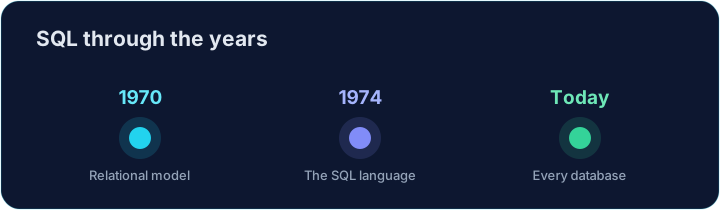
- In 1970, Edgar F. Codd at IBM had a powerful idea: keep data in plain tables.
- He called it the relational model — tables linked by shared values.
- It is still how most databases work today.
The SQL language
- Around 1974, Donald Chamberlin and Raymond Boyce at IBM built a language to question those tables.
- They first named it SEQUEL, later shortened to SQL.
- That's why many people still say "sequel" out loud.
You say what, not how
- SQL is declarative: you say what data you want, not how to fetch it.
- The database works out the fastest way to get it for you.
- So one short, clear query can search through millions of rows.
SELECT name FROM student;
SQL today
- In 1986, SQL became an official ANSI standard, so everyone agreed on the basics.
- Today nearly every relational database speaks SQL — SQLite, MySQL, PostgreSQL, SQL Server.
- Learn it once, and you can talk to all of them.