Demand, supply and elasticity
| English | Chinese | Pinyin |
|---|---|---|
| demand | 需求 | xū qiú |
| supply | 供给 | gōng jǐ |
| equilibrium | 均衡 | jūn héng |
| quantity demanded | 需求量 | xū qiú liàng |
| price elasticity of demand | 需求价格弹性 | xū qiú jià gé tán xìng |
| elastic | 富有弹性 | fù yǒu tán xìng |
| inelastic | 缺乏弹性 | quē fá tán xìng |
| revenue | 营业收入 | yíng yè shōu rù |
The market sets the price
- A firm would love to charge whatever it likes — but the market has the final say, through demand 需求 and supply 供给.
- Understanding how they interact is the foundation of pricing and forecasting.
The equilibrium price is where:
Equilibrium clears the market.
Demand, supply and equilibrium 均衡
- Demand falls as price rises; supply rises as price rises.
- The market settles at the equilibrium price, where the two are equal.
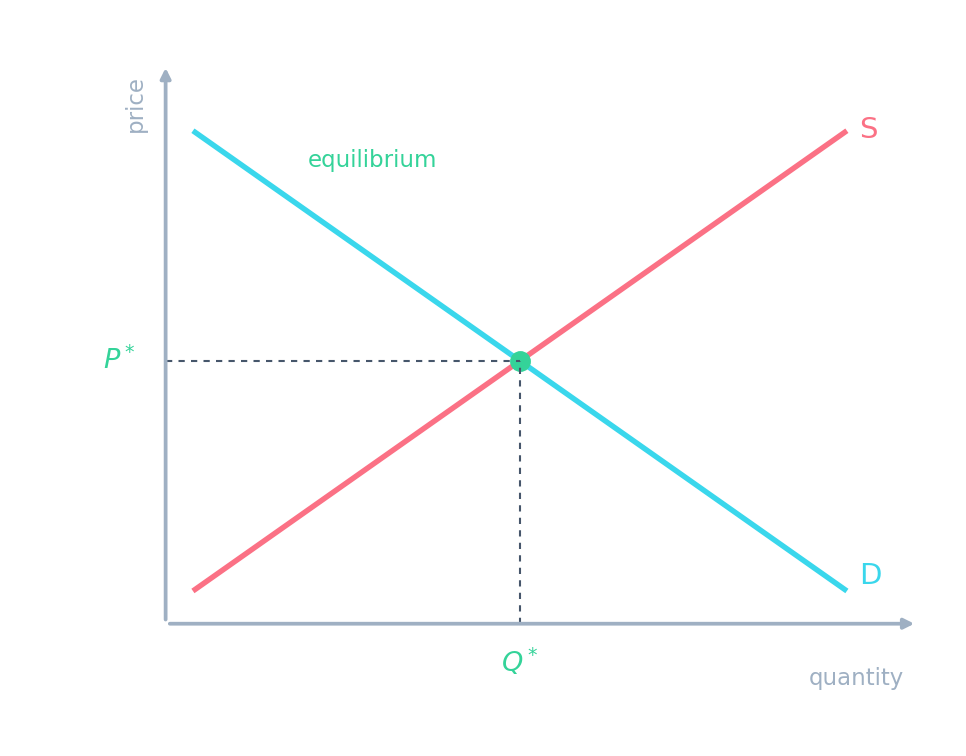
The equilibrium price is where quantity demanded 需求量 equals quantity supplied.
Demand, supply & elasticity
Price is set where demand meets supply.
Price rises 10% and quantity demanded falls 25%. What is the size of PED?
PED = 25% / 10% = 2.5 (elastic).
A product with many close substitutes tends to have elastic demand.
Substitutes let customers switch, making demand price-sensitive.
When quantity demanded responds strongly to price, demand is said to be ______.
Elastic demand has PED greater than 1.
Price elasticity of demand 需求价格弹性
- PED measures how much quantity demanded responds to a price change.
- Elastic 富有弹性 (PED > 1): quantity is sensitive to price; inelastic 缺乏弹性 (PED < 1): it is not.
If demand for a product is inelastic, raising its price will:
With inelastic demand, quantity falls little, so revenue rises.
Why elasticity matters for revenue 营业收入
- If demand is inelastic, raising price raises revenue.
- If demand is elastic, raising price lowers revenue — so a firm may cut price to sell far more.
Know your elasticity before changing price. A price rise helps revenue only if demand is inelastic. For an elastic product, the same rise drives customers away and revenue falls.
You've got it
- price settles at equilibrium, where demand meets supply
- PED measures demand's sensitivity to price (elastic >1, inelastic <1)
- inelastic → raise price to raise revenue; elastic → the opposite