Inheritance: extends, super, and overriding
Handout
This page needs a recent browser (with SharedArrayBuffer support). Please update Chrome, Edge, Firefox or Safari to the latest version.
Inheritance: building on a class
- Inheritance lets one class reuse another class's fields and methods.
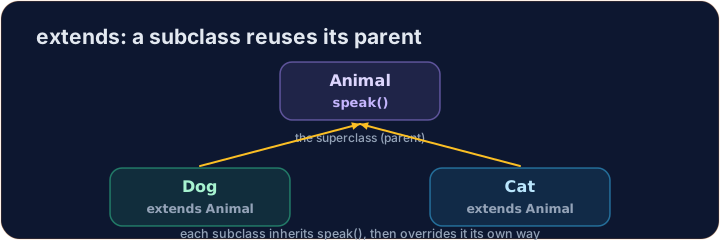
- The class you build on is the superclass (parent); the new class is the subclass (child).
- A subclass is-a kind of its superclass: a
Dogis anAnimal.
extends and super
- Write
class Dog extends Animalto makeDoga subclass ofAnimal. Dogautomatically gets every public method ofAnimal, likegetName().- The subclass constructor calls the superclass constructor first with
super(...).
public class Main {
    public static void main(String[] args) {
        Dog d = new Dog("Rex");
        System.out.println(d.getName());   // Rex   (inherited from Animal)
        System.out.println(d.speak());     // Woof  (Dog's own version)
    }
}

class Animal {
    private String name;
    public Animal(String name) { this.name = name; }
    public String getName() { return this.name; }
    public String speak() { return "some sound"; }
}

class Dog extends Animal {
    public Dog(String name) {
        super(name);          // run Animal's constructor
    }
    public String speak() {   // override Animal's speak()
        return "Woof";
    }
}
Overriding a method
- A subclass can override an inherited method: give it the same signature, a new body.
Dog'sspeak()replacesAnimal'sspeak()forDogobjects.- Methods it does not override (like
getName()) are still inherited unchanged.
super.method() — extend, don't replace
- Sometimes you want the parent's work plus a little more.
- Inside an override,
super.describe()runs the superclass version of the method. - Then you add to its result instead of rewriting it from scratch.
public class Main {
    public static void main(String[] args) {
        Bird b = new Bird("Tweety");
        System.out.println(b.describe());
        // I am an animal named Tweety, and I can fly
    }
}

class Animal {
    private String name;
    public Animal(String name) { this.name = name; }
    public String describe() { return "I am an animal named " + this.name; }
}

class Bird extends Animal {
    public Bird(String name) { super(name); }
    public String describe() {
        return super.describe() + ", and I can fly";   // reuse, then add
    }
}
is-a: a subclass fits where its superclass is expected
- Because a
Dogis anAnimal, you can writeAnimal a = new Dog("Spot");. - The variable's type is
Animal, but the object is really aDog. - This "is-a" rule is what makes the next lesson — polymorphism — possible.
Common mistakes
super(...)must be the first line of a subclass constructor.- Add
@Overrideso the compiler catches a wrong signature.
Now you try
- Each task gives you a finished
Animalsuperclass. Write or complete the subclass below it. - A hidden Harness builds your object and checks both inherited and new behaviour.
- Press Run to compile, then Check answer. Your code runs on the server, so even the first run is fast.
Below the finished Animal, write a class Cat that extends Animal. Give it a constructor Cat(String name) that passes the name up with super(name). Add nothing else — Cat should inherit getName() for free.
Click Run to see the output here.
Complete the class Cow (it already extends Animal). Override speak() so a Cow returns "Moo" instead of the default. getName() must still work (inherited).
Click Run to see the output here.
Complete the class Fish (it already extends Animal). Override describe() so it returns the Animal description plus ", and I can swim". Reuse the parent's work by calling super.describe() — do not rewrite the whole sentence.
Click Run to see the output here.